
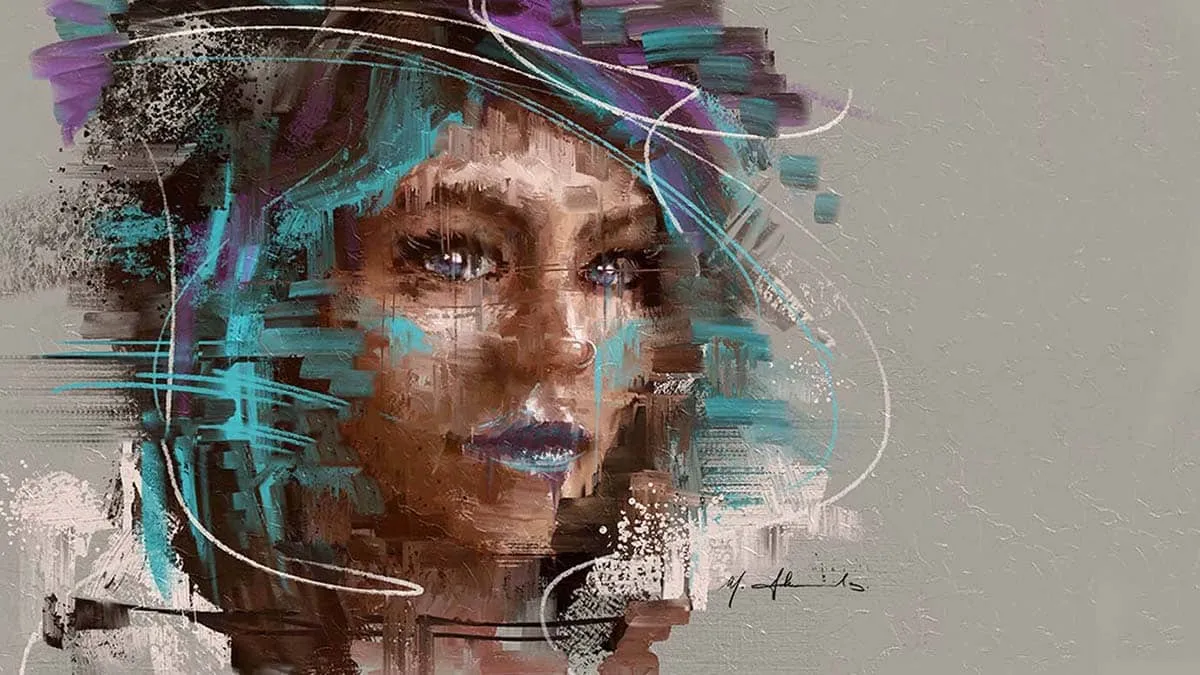
Digital portrait illustration has completely revolutionized the way we capture the essence of the human face, blending traditional soul with modern technical precision. I still remember the first time I sat down with a drawing tablet, feeling the strange disconnect between my hand moving on a plastic surface and the lines appearing on a glowing screen. It felt clumsy and artificial at first, a far cry from the familiar scratch of charcoal on textured paper. But as the brush stabilized and the colors began to glow with a vibrancy that physical paint could never achieve, I realized I was stepping into a limitless world.
The beauty of this medium lies in its forgiving nature and its boundless potential for experimentation. In the traditional world, a single misplaced stroke of oil paint or a muddy watercolor wash can ruin hours of painstaking work. In the digital realm, the magic of the “Undo” button and the flexibility of layers provide a safety net that encourages artists to take risks they would never dare on an expensive canvas. This freedom has opened the door for a new generation of creators to explore the human form in ways that were previously unimaginable.
Capturing a likeness is no longer just about replicating a photograph but about interpreting a personality through a digital lens. When you start a portrait today, you aren’t just thinking about the physical features like the slope of a nose or the curve of a lip. You are thinking about how light interacts with skin, how a specific color palette can evoke a mood, and how digital textures can simulate the feel of a traditional painting. It is an intricate dance between human observation and software capability.
Modern artists are finding that this medium allows them to connect with clients and fans across the globe with incredible ease. A freelance illustrator in a small town can now create a stunning piece for a magazine in London or a private commission for a family in Tokyo. This global connectivity has turned the art world into a vibrant, 24/7 community where inspiration flows freely across borders and time zones. The barrier to entry has shifted from owning expensive supplies to possessing a curious mind and a willingness to learn.
The Essential Tools for a Digital portrait illustration
Every great journey in this field starts with the right hardware, and the choices available today are better than ever. For a long time, the industry was dominated by bulky pen displays that required a powerful desktop computer to run. While these remain the gold standard for many professional studios, the rise of the portable tablet has changed everything. Being able to sketch a portrait while sitting in a coffee shop or lying on a park bench has brought a level of spontaneity back to the creative process.
The stylus is perhaps the most important tool in an artist’s arsenal, acting as a direct extension of their nervous system. The pressure sensitivity and tilt recognition in modern pens allow for a level of control that mimics traditional brushes with startling accuracy. When you press down harder to get a thicker line or tilt the pen to shade with the side of a virtual charcoal stick, the technology disappears, and the art takes over. It is this tactile feedback that makes the digital experience feel truly natural.
On the software side, the landscape is equally diverse, offering something for every style and budget. Programs like Adobe Photoshop remain the industry powerhouse for high-end rendering and complex compositions, while applications like Procreate have made professional-grade tools accessible to everyone with a tablet. Each software has its own “feel,” and finding the one that matches your specific workflow is part of the fun of becoming a digital artist. Some prefer the clean, mathematical precision of vector art, while others crave the messy, organic textures of digital oils.
Beyond the hardware and software, the most underrated tool is the digital community itself. Platforms like YouTube and ArtStation are filled with tutorials, brush packs, and feedback loops that can accelerate an artist’s growth exponentially. The ability to watch a master artist render skin tones in real-time or explain their layering strategy is a resource that previous generations of painters would have killed for. Learning is now a collaborative, ongoing process rather than a solitary struggle in a studio.
Mastering the Workflow of a Digital portrait illustration
The process of creating a digital portrait usually begins with the “under-drawing,” which is the foundational sketch that defines the proportions and likeness. This is where the heavy lifting happens, as even the most beautiful colors cannot save a portrait with broken anatomy. Many artists use a low-opacity brush to block out large shapes before refining the features with a cleaner line. The advantage of digital art here is that you can flip the canvas horizontally to spot mistakes that your eye has become accustomed to.
Once the sketch is solid, the layering process begins, which is the secret sauce of the modern illustrator. By keeping the lines, the skin tones, the hair, and the background on separate layers, you maintain total control over every element of the composition. If you decide halfway through that the skin is too pale or the background is too distracting, you can adjust those layers individually without affecting the rest of the piece. This non-destructive workflow is what allows for the high level of polish we see in professional work.
Coloring a digital portrait is a journey into the science of light and the psychology of hue. Most artists start with “flat colors,” filling in the large areas with mid-tones before moving on to shadows and highlights. The use of “Adjustment Layers” and “Blending Modes” allows you to experiment with different lighting conditions in seconds. You can turn a bright, sunny afternoon portrait into a moody, moonlight scene just by overlaying a blue-tinted layer and changing the blend mode to Multiply. This versatility is what makes the medium so addictive.
Rendering the details, like the sparkle in an eye or the texture of a knitted sweater, is the final stage that brings the piece to life. Many artists use custom brushes to simulate skin pores, freckles, or individual strands of hair. However, the key to a successful portrait is knowing when to stop. Over-rendering can make a face look plastic or artificial, while leaving some areas loose and painterly can lead the viewer’s eye to the most important features. It is a balance between technical perfection and artistic expression.
Developing a Unique Style in Digital portrait illustration
With so many tools and tutorials available, the biggest challenge for a modern artist is finding their own voice in a sea of digital content. It is easy to fall into the trap of mimicking the most popular artists on Instagram, but true success comes from blending your personal influences with the digital medium. Your style is essentially the collection of “shortcuts” and “choices” you make during the painting process, from the way you draw eyes to the specific textures you prefer.
Experimenting with different brush settings is a great way to discover new aesthetic directions. Some artists prefer a “lineless” look where the forms are defined entirely by color and value, creating a three-dimensional, cinematic feel. Others embrace the “comic book” style, using bold, expressive line art and vibrant cel-shading. The digital world is your playground, and there are no rules saying you have to stick to one specific way of working. Some of the most exciting art being made today blends 2D painting with 3D elements or even animated flourishes.
The reference material you choose also heavily influences the final style of your work. While it is tempting to just use a single photograph, the best portraits are often a composite of several references combined with the artist’s imagination. This prevents the “uncanny valley” effect where a digital portrait looks like a slightly “off” version of a photo. By injecting your own personality and artistic flair into the features, you create something that feels more alive and authentic than a simple copy.
Style development is a marathon, not a sprint, and it requires thousands of hours of intentional practice. Every portrait you finish is a lesson learned, and over time, you will notice certain patterns emerging in your work. You might find that you are naturally drawn to warm, sunset lighting or that you love creating high-contrast, noir-inspired pieces. Embracing these natural inclinations is what will eventually set your work apart in a crowded marketplace.
The Importance of Anatomical Knowledge
Despite the bells and whistles of modern software, the fundamentals of anatomy remain the backbone of any successful digital portrait illustration. Understanding the underlying structure of the skull, the way muscles wrap around the jaw, and the subtle shifts in skin color over different areas of the face is vital. Without this knowledge, a portrait can look flat or distorted, regardless of how many fancy brushes or lighting effects you apply. The best digital artists spend as much time studying medical diagrams as they do playing with new software features.
The eyes, often called the windows to the soul, require a deep understanding of geometry and light. They aren’t just flat circles on a face; they are spheres tucked into sockets, covered by eyelids that have thickness and cast shadows. Capturing the wetness of the eye or the way the iris catches light is what makes a portrait feel like it is looking back at you. This level of detail is only possible when you understand the physical reality of the human body.
Similarly, the way we render hair and skin is rooted in physics and biology. Skin is translucent, meaning light doesn’t just bounce off the surface but travels through the upper layers, creating a “subsurface scattering” effect. This is why shadows on a face often have a warm, reddish tint near the edges. Learning these scientific principles allows an artist to use digital tools more effectively, creating a sense of realism that resonates with the viewer on a subconscious level.
Digital artists often use “planes of the head” models, like the Asaro head, to simplify the complex curves of the face into flat surfaces. This helps in understanding how light falls across the forehead, the cheekbones, and the chin. By breaking the face down into these manageable sections, you can build up the form and volume before adding the soft, organic transitions that make a portrait look human. It is a structured approach to a seemingly chaotic subject.
Building a Professional Portfolio
In the digital age, your portfolio is your most important asset, serving as your storefront and your resume all in one. A strong portfolio for digital portrait illustration should showcase not just your technical skill but your range and your ability to tell a story through a single face. Potential clients want to see that you can capture different ages, ethnicities, and expressions, and that you have a consistent level of quality across all your work.
Presentation is key when sharing your art online, as the digital marketplace is incredibly visual. Many artists create “process videos” or “step-by-step” images that show how a piece was built from the ground up. This not only builds trust with potential clients by proving the work is your own, but it also engages the community and helps you build a following. People love to see the “behind the scenes” magic of how a blank screen becomes a stunning work of art.
Specializing can often be more beneficial than being a generalist when starting out. You might become known as the go-to person for high-fantasy character portraits or the artist who specializes in soulful, minimalist black-and-white digital sketches. By carving out a niche, you make it easier for the right clients to find you. As your reputation grows, you can expand your horizons and explore different genres and styles.
Professionalism also extends to how you handle commissions and client relationships. Clear communication, meeting deadlines, and having a transparent pricing structure are just as important as your drawing skills. Many artists use platforms like Patreon or Ko-fi to supplement their income, providing exclusive content and early access to their fans. The business of digital art is about building a sustainable ecosystem where your creativity is valued and protected.
Overcoming the “Digital Look”
One of the most common criticisms of digital art is that it can sometimes look too “clean” or “clinical.” To combat this, many illustrators look for ways to inject some of that traditional “soul” back into their pieces. This can be done by adding digital noise, paper textures, or using brushes that have a bit of “jitter” and unpredictability. The goal is to make the digital piece feel like it has been touched by a human hand rather than a perfect algorithm.
Using a limited color palette is another great way to give your digital portraits a more cohesive and professional feel. In the traditional world, an artist is limited by the tubes of paint they have on their palette. In the digital world, you have millions of colors at your fingertips, which can often lead to a “muddy” or overwhelming result. By restricting your choices, you force yourself to be more creative with values and lighting, resulting in a more harmonious and impactful image.
Integrating traditional sketches into your digital workflow is also a popular technique. Many artists prefer to do their initial thinking and sketching with a real pencil in a physical sketchbook before scanning the drawing and finishing it digitally. This preserves the raw, energetic lines of a hand-drawn sketch while allowing for the professional rendering and coloring of digital software. It is a “best of both worlds” approach that keeps the art grounded in the physical experience.
Final touches like color aberration, slight blurring of the edges, or adding a light “glow” to the highlights can mimic the imperfections of a real camera lens or a physical painting. These subtle effects help to break up the perfect digital lines and make the portrait feel more integrated into a real environment. The mark of a master digital artist is often the ability to hide the fact that the piece was made on a computer at all.
The Evolving Role of Artificial Intelligence
The art world is currently grappling with the rise of AI-generated images, and the field of digital portrait illustration is at the center of this debate. While some fear that technology will replace human artists, many creators see it as a new tool to be integrated into the workflow. AI can be used to generate lighting references, explore color palettes, or create background elements, allowing the artist to focus more on the emotional core of the portrait.
The true value of a portrait has always been the human connection and the specific intent of the artist. An AI can replicate a face, but it cannot (yet) understand the history, the soul, and the specific “spark” that makes a person who they are. Clients still value the unique perspective and the collaborative process of working with a human illustrator to bring a vision to life. The role of the artist is shifting from a “maker” to a “director” and “curator.”
Ethical considerations are paramount when it comes to AI and digital art. Many artists are concerned about copyright and the use of their work to train machine learning models without consent. Navigating this new landscape requires a commitment to transparency and a focus on the skills that machines cannot easily replicate: storytelling, empathy, and personal style. The conversation is ongoing, and the art community is actively working to find a balance that protects creators while embracing innovation.
Ultimately, technology is just another medium, and the core principles of art remain unchanged. Whether you use a brush made of hog hair or a brush made of code, the goal is to communicate an idea and evoke an emotion. Those who continue to refine their fundamentals and embrace their unique human perspective will always find a place in the art world, regardless of how the tools evolve.
The Future of Portraits in a Digital World
As we look forward, the world of digital art is moving into even more immersive territories like Virtual Reality (VR) and Augmented Reality (AR). Imagine being able to walk around a three-dimensional digital portrait or having a piece of art on your wall that changes its lighting based on the time of day in your room. The line between the digital and physical worlds is blurring, and portraiture is evolving into a multi-sensory experience.
Community-driven art events, like “Draw This In Your Style” challenges on social media, are continuing to foster a spirit of collaboration and growth. These events allow artists to see how a hundred different people can interpret the same subject, highlighting the incredible diversity of the digital medium. It is a reminder that there is no “correct” way to draw a face, only your way.
The professional landscape is also expanding, with digital portraits being used in everything from high-end video game character design to personalized avatars for the metaverse. The demand for high-quality, soulful illustration is higher than it has ever been, providing exciting opportunities for artists to turn their passion into a career. The only limit is how far you are willing to push your imagination.
Learning digital portrait illustration is a journey that never truly ends. There will always be a new software update to master, a new brush technique to try, and a new face to capture. But at the end of the day, it all comes back to that initial spark of curiosity and the joy of seeing a personality emerge from a blank screen. It is a beautiful, challenging, and rewarding pursuit that connects us to the very heart of the human experience.
The digital canvas is waiting, and the tools are more powerful than ever. Whether you are a seasoned professional or a curious beginner, there has never been a better time to dive into the world of digital art. Grab your stylus, open your software, and start telling the stories of the faces around you. The world is waiting to see what you create.

