
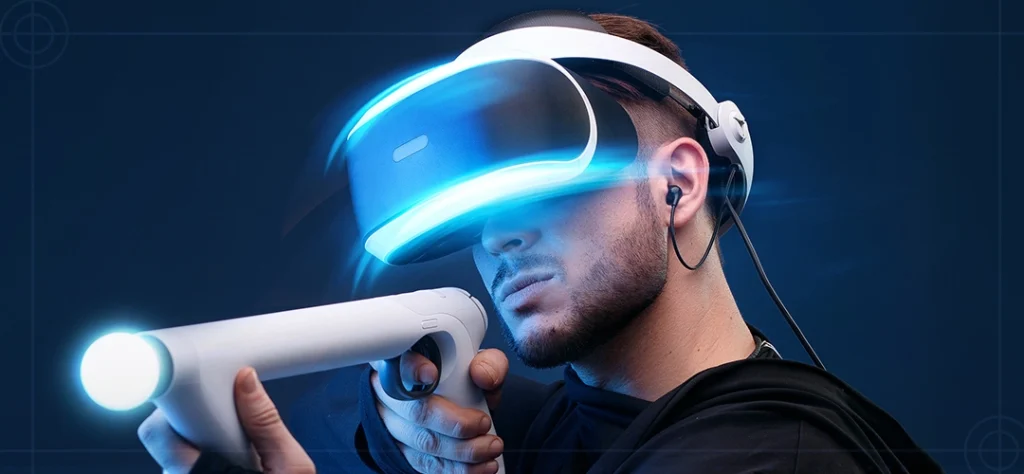
VR gaming experiences have evolved into one of the most exciting, immersive, and forward-thinking movements in the gaming industry. What started as experimental technology has now become a mainstream gateway to interactive digital worlds that feel alive, responsive, and emotionally engaging. Players are no longer just moving a character on a screen—they are stepping directly into the game itself.
When someone puts on a VR headset for the first time, the shift is immediate. The walls of the physical world fade into the background, replaced by breathtaking landscapes, sci-fi environments, fantasy realms, and hyper-realistic simulations. This sensation of presence is what makes VR unique. Players feel as though they’ve crossed from reality into another dimension, one crafted through intelligent design, technology, and storytelling.
As VR continues advancing, the experience becomes more comfortable, more intuitive, and more emotionally powerful. Developers are focusing on world-building, physics interactions, body tracking, and narrative depth to create experiences that resonate personally with players. Because VR engages the senses—sight, sound, motion, touch, and emotional immersion—its impact is far greater than traditional gaming.
The growing demand for VR gaming experiences comes from players craving something new. Gamers want more than visual upgrades—they want realism, freedom, and emotional connection. VR delivers this through fully interactive environments that respond naturally to movement. This is why VR titles are no longer novelties but serious entries in modern gaming culture worldwide.
Why VR gaming experiences are becoming essential for modern players
The rise of VR is driven by players who want deeper engagement with their favorite genres. Even someone who has played games their entire life can walk into VR and feel like they are rediscovering gaming from the beginning. VR reintroduces a sense of wonder.
There is something unforgettable about leaning over the edge of a virtual cliff, only to feel your stomach drop as if you were standing thousands of feet high. Or drawing a virtual bow, feeling tension in your arm as you aim, before watching your arrow soar across a digital sky. These sensations create memories, not just moments. The emotional connection is strong because VR triggers instinctive human reactions.
Arcade-style games feel more energetic because your whole body participates. Racing games feel faster because you sense distance and motion. Horror games feel more intense because the sense of presence makes every sound, shadow, and movement feel real. This is why VR has become essential for players seeking something that traditional screens can’t replicate.
The accessibility of VR has also improved significantly. Headsets are lighter, more ergonomic, and more affordable. Wireless technology has removed the cables that once restricted movement. Room-scale tracking has become smoother, enabling players to walk, crouch, lean, and interact freely. These improvements contribute to experiences that feel seamless and natural.
Most importantly, developers understand VR better than ever before. In the early days, many VR games were experimental and short-lived, designed to test motion controls. Today, developers create full-length adventures, complex multiplayer titles, and persistent worlds. The industry has matured, allowing for artistic expression, narrative depth, and emotional resonance that rival the best traditional games.
Immersion at a new level: what defines VR gaming experiences
The core of VR is immersion—the feeling of actually being inside the game rather than observing it from the outside. Immersion in VR comes from interactivity, presence, and sensory engagement woven together.
Presence is the psychological effect of believing you are inside the virtual world. Spatial audio enhances this effect by creating directional sound cues that mimic real environments. When a creature growls behind you or footsteps echo from a distance, your instinct is to turn your head immediately.
Environmental interactivity is equally important. VR worlds allow players to grab objects, open doors, climb structures, cast spells, reload weapons, drive vehicles, and navigate environments using natural movements. Every action reinforces the sense of connection between the player and the digital space.
Motion tracking has become highly advanced. Head movements, hand gestures, body posture, and even subtle wrist motions can be interpreted accurately. This precision makes interactions feel smooth and responsive, improving the authenticity of every moment.
Haptic feedback also enhances immersion. Vibrations in controllers simulate recoil, tension, impact, or environment-specific sensations. Some advanced systems even use full-body suits or gloves to simulate touch, heat, or texture. These technologies elevate VR gaming experiences beyond visual immersion into physical and emotional realism.
The more senses involved, the more powerful the immersion becomes. VR creates memories that feel vivid because the mind responds as if the events were real. Every room, environment, sound, and motion leaves a lasting impression.
VR gaming experiences reshaping action, adventure, and exploration
Different genres benefit uniquely from VR. Action games feel more intense because physical movement translates into gameplay. Swinging a sword, punching, dodging attacks, or blocking with a shield all rely on real-world reactions. Players move instinctively, making fast-paced combat more dynamic.
Adventure games shine in VR because exploration becomes a physical act. You can step into ancient temples, dark forests, post-apocalyptic ruins, or futuristic cities and explore them as if you were actually there. The ability to look around corners, examine objects up close, and navigate environments with natural movement changes how players approach exploration.
Puzzle games also thrive in VR. Manipulating objects in three-dimensional space stimulates the mind differently from flat-screen puzzles. The experience becomes tactile and intuitive, allowing players to rotate, combine, and examine items physically.
Narrative-driven titles reach new emotional heights. You can stand face-to-face with characters, observe their expressions, and feel their presence. Conversations become more intimate because eye contact and proximity feel genuine. Storytelling becomes a lived experience rather than something read or watched.
Horror games are transformed entirely. Even simple atmospheric effects—like footsteps, flickering lights, or distant whispers—can create overwhelming tension. Horror in VR relies less on jumpscares and more on psychological immersion that triggers natural fear responses.
Simulation games achieve realism through VR’s ability to mimic real-world mechanics. Whether flying a virtual aircraft, operating heavy machinery, or managing a virtual workspace, VR recreates the experience with fidelity. This makes VR useful beyond gaming as well, from professional training to therapeutic environments.
The emotional depth of VR gaming and player connection
Emotion is one of the strongest qualities of VR. Traditional games rely on characters and cinematics to create emotional impact. In VR, emotion is amplified because players feel physically and mentally present in the scene.
When a character reaches out a virtual hand, it feels natural to respond. When someone in the virtual world expresses fear, joy, sadness, or excitement, you feel part of the moment rather than an observer. These emotions often linger long after the gameplay ends.
Many players share stories about VR moments that felt deeply personal. Standing in a virtual home that resembles a childhood memory. Staring at a digital sunset that feels real enough to calm the mind. Helping a virtual companion in emotional distress. These small moments shape the long-lasting appeal of VR gaming experiences.
Developers now design emotional landscapes using sound design, subtle animations, and world-building to influence mood. Fear is created through darkness and silence. Peace is crafted with gentle lighting and music. Excitement builds through scale and movement. VR becomes a vessel for emotional storytelling that resonates with players on a deeper level.
VR technology advancements making gaming smoother and more immersive
The technology powering VR continues to push boundaries. Headset resolution has increased dramatically, reducing the screen door effect and enhancing clarity. Wider field-of-view lenses make the virtual world feel more open and realistic.
Dynamic foveated rendering optimizes graphics by tracking the player’s eyes, allowing detailed visuals exactly where they are looking while saving processing power elsewhere. This boosts performance without sacrificing quality.
Eye tracking also enhances gameplay. Characters can react to eye movement, puzzles can be solved through gaze-based mechanics, and menus become more intuitive. This technology transforms user interaction in subtle but meaningful ways.
Hand tracking allows players to interact without controllers, using natural gestures like pointing, grabbing, or waving. This removes barriers and makes VR more intuitive for new users.
Wireless systems eliminate cables, allowing free movement and reducing discomfort. Improved battery technology ensures longer play sessions without overheating or lag.
Haptics, temperature simulation, and adaptive resistance technology expand physical immersion. Touch becomes a new input method rather than an illusion.
These advances create smoother, more comfortable VR gaming experiences that players enjoy for longer periods.
How VR multiplayer worlds create social and competitive excitement
Multiplayer VR brings a unique layer of excitement because interactions feel like real-world social exchanges. In VR, players see each other’s hand gestures, body language, head movement, and expressive animations. This creates a social presence unmatched by traditional online gaming.
Cooperative VR games allow players to solve puzzles, fight enemies, or explore together. Communication becomes natural because pointing, waving, and gesturing replace traditional chat.
Competitive VR titles add intensity because physical skill matters. Dodging, aiming, swinging, blocking—all rely on real movement. This creates a balanced mix of gaming skill and physical coordination.
Social VR platforms allow people to hang out in virtual spaces, host events, watch movies, or attend concerts. These environments foster communities that feel genuine and welcoming.
As multiplayer technology improves, VR is becoming a social hub where players build friendships and experience shared adventures that feel authentic.
The limitless creative future of VR gaming experiences
Developers are only beginning to explore the creative potential of VR. Every year introduces new ideas, genres, and technologies that push the medium forward. As more studios experiment with hybrid gameplay systems, players get access to worlds previously impossible to imagine.
Procedural generation will allow infinite worlds to explore. AI-driven characters will behave with realism and unpredictability. Haptic innovation will create deeper sensory connections. Environmental storytelling will reach cinematic levels.
What makes VR’s future so exciting is that players aren’t just receiving upgraded visuals—they’re witnessing a new dimension of gaming evolve in real time.
The creative possibilities are endless, and the most transformative VR gaming experiences are still ahead.
Read also:
xbox cloud beta
xbox gaming cloud beta
xbox cloud beta gaming
which greblovz2004 should i start with
greblovz2004 free

