
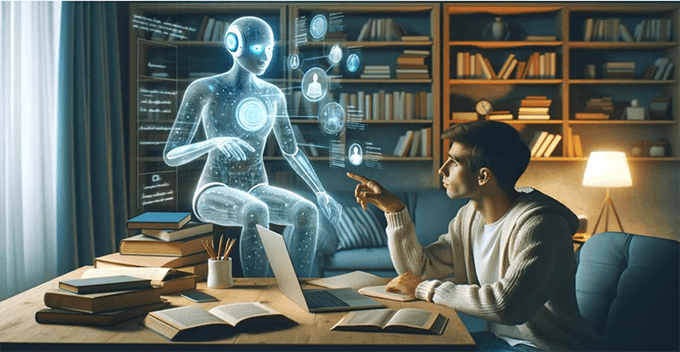
AI tutors for students are revolutionizing the way learners engage with education. These intelligent systems provide personalized guidance, adaptive lessons, and real-time feedback, bridging gaps that traditional classrooms sometimes miss. From elementary schools to universities, AI tutors are becoming an indispensable part of modern education.
Imagine a high school student struggling with algebra. Traditional tutoring may be limited by scheduling, availability, or cost. With AI tutors for students, personalized lessons are available anytime, offering interactive exercises, hints, and instant feedback. This approach allows students to practice at their own pace, building confidence and mastery.
Personalized Learning with AI Tutors for Students
One of the greatest advantages of AI tutors for students is personalization. Every learner has unique strengths and challenges, and AI adapts lessons accordingly. Machine learning algorithms analyze student performance, identify weak areas, and tailor content to optimize learning outcomes.
For instance, a language learner using an AI tutor receives exercises that focus on grammar mistakes or pronunciation challenges. If a student excels in reading comprehension but struggles with writing, the system adjusts lessons to target improvement areas. This continuous adaptation ensures each student receives a customized learning experience that evolves with their progress.
Real-Time Feedback and Progress Tracking
Immediate feedback is critical for effective learning. AI tutors for students provide instant corrections and explanations, allowing learners to understand mistakes and correct them on the spot. This immediate response fosters deeper understanding and prevents misconceptions from taking root.
Consider a student practicing chemistry problems online. An AI tutor identifies calculation errors, explains the correct method, and suggests similar problems for reinforcement. Over time, the system tracks progress, highlighting strengths and areas needing attention. Real-time analytics also help teachers or parents support the learner effectively.
Enhancing Engagement and Motivation
Traditional study methods can sometimes feel monotonous, leading to disengagement. AI tutors make learning interactive and engaging by incorporating gamification, adaptive quizzes, and multimedia content. These features turn study sessions into dynamic experiences that keep students motivated.
For example, a math AI tutor might transform problem-solving into a challenge with points, levels, and rewards. Students are encouraged to complete exercises to unlock achievements, blending learning with playful competition. This engagement strategy shows how AI tutors for students make education both effective and enjoyable.
Accessibility and Flexible Learning
Accessibility is a major benefit of AI tutors for students. Learners can access AI systems anytime, anywhere, breaking barriers caused by location, time, or cost. This flexibility is especially valuable for students in remote areas, working learners, or those requiring additional support outside classroom hours.
A university student balancing coursework and a part-time job can schedule sessions with an AI tutor at convenient times, ensuring learning continuity. This flexible approach empowers students to take control of their education while maintaining other responsibilities.
Supporting Teachers and Educators
AI tutors are not designed to replace teachers—they complement them. By handling repetitive tasks, providing individualized support, and tracking student progress, AI tutors free educators to focus on creative instruction and mentorship.
For example, a teacher managing a large classroom can rely on AI tutors to identify struggling students and recommend targeted interventions. AI tutors for students thus act as valuable assistants, enhancing the overall teaching and learning process while maintaining human oversight.
AI Tutors for Collaborative Learning
Learning isn’t only about individual performance. Many AI systems incorporate collaborative features that allow students to work in virtual groups, discuss solutions, and share insights. This simulates real-world teamwork and communication skills.
Consider a group of high school students tackling coding exercises. The AI tutor assigns tasks, monitors collaboration, and provides feedback on problem-solving approaches. This combination of personalized guidance and peer learning demonstrates how AI tutors for students foster a holistic educational experience.
Real-Life Case Studies
Several educational platforms have successfully integrated AI tutors. For instance, platforms like Duolingo and Khan Academy use AI-driven algorithms to deliver personalized exercises and adapt lesson difficulty. Coursera and EdX offer AI-assisted feedback for learners tackling complex subjects like data science or business analytics.
In each case, the AI tutors track learner progress, recommend resources, and provide actionable insights. These platforms exemplify how AI transforms learning across subjects and education levels, making knowledge acquisition more efficient, engaging, and adaptive.
Overcoming Learning Challenges
Every student encounters challenges—gaps in understanding, lack of motivation, or difficulty keeping pace. AI tutors for students address these challenges by continuously analyzing performance and adjusting lessons to suit individual needs.
For instance, a struggling high school physics student can receive step-by-step problem explanations, interactive simulations, and additional exercises targeting weak areas. This personalized intervention helps learners overcome obstacles faster than traditional approaches alone.
Preparing Students for the Future
The role of AI tutors for students extends beyond academic performance. By interacting with intelligent systems, students develop digital literacy, problem-solving skills, and adaptability—essential competencies for the modern workforce.
A student learning coding through an AI tutor gains not only technical skills but also critical thinking and self-directed learning habits. These experiences prepare learners for a technology-driven future, ensuring they are ready for careers that demand innovation and adaptability.
Addressing Challenges of AI Tutoring
Despite the advantages, integrating AI tutors comes with challenges. Ensuring data privacy, preventing over-reliance on technology, and maintaining human oversight are crucial. Schools and parents must balance AI use with traditional instruction to maximize learning benefits.
For example, some students may need face-to-face mentorship for social development or emotional support. AI tutors for students are most effective when combined with human guidance, providing a balanced, supportive learning ecosystem.
The Future of AI Tutors
The future of AI tutors is promising. Advancements in natural language processing, adaptive learning algorithms, and AI-driven analytics will make these systems more intuitive, responsive, and effective. Integration with virtual reality, gamification, and hybrid learning platforms will create immersive, personalized experiences that redefine education.
Imagine an AI tutor that analyzes your learning style, predicts areas of difficulty, and creates fully personalized interactive lessons. AI tutors for students are poised to transform classrooms, supplement traditional teaching, and empower learners to reach their full potential.
Read also:
5878559368
6135550198
4039071172
6042953505
18777671024

