
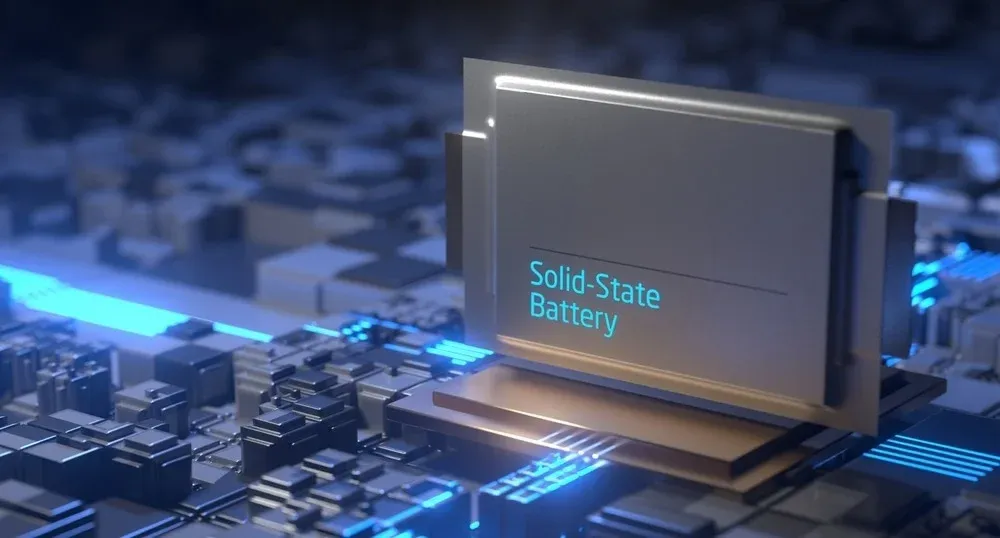
Solid-State Battery Tech represents the single most significant leap in energy storage since the commercialization of the lithium-ion battery in the early nineties. Imagine sitting in your electric vehicle at a charging station, but instead of waiting forty-five minutes for a decent top-up, your car is ready to go in less than ten minutes. This isn’t just about convenience; it is about a fundamental shift in how we move, work, and interact with the digital world. For years, the limitations of liquid electrolytes have been the “glass ceiling” of the tech world, holding back everything from long-range EVs to smartphones that last for days.
The core difference lies in the internal chemistry of how power is moved and stored. Current lithium-ion batteries use a liquid electrolyte to move ions between the anode and the cathode. While effective, this liquid is volatile, flammable, and prone to degradation over time. By replacing that liquid with a solid material, researchers are unlocking a new era of stability and density. This transition is not just a minor upgrade; it is akin to moving from a horse-drawn carriage to a combustion engine in terms of potential impact on society.
We have all seen the news reports of electric vehicle fires or smartphone batteries swelling up after years of use. These issues are almost entirely caused by the liquid nature of the electrolyte and the physical stress it undergoes during charge cycles. Solid-state alternatives eliminate the risk of leakage and are significantly more resistant to high temperatures. This inherent safety profile means that engineers can pack more energy into a smaller space without the bulky cooling systems required today.
For a father planning a long road trip with his family, the transition to this new technology means more than just faster charging. It means a range of seven hundred miles on a single charge, effectively killing “range anxiety” once and for all. It means a vehicle that retains its value because the battery doesn’t degrade nearly as fast as the one in your current laptop. This human element is why the race to commercialize this technology has become a multi-billion-dollar global competition involving the world’s largest automakers and tech giants.
The Science Behind Solid-State Battery Tech
To understand why Solid-State Battery Tech is considered the holy grail of energy, we have to look at the microscopic level. In a standard battery, the liquid electrolyte can allow for the growth of “dendrites.” These are tiny, needle-like structures of lithium that can grow across the battery, causing a short circuit. When a short circuit happens in a liquid environment, it can lead to thermal runaway, which is a fancy way of saying the battery catches fire.
A solid electrolyte acts as a physical barrier that prevents these dendrites from ever reaching the other side. This allows for the use of a lithium-metal anode, which is much more energy-dense than the graphite anodes we use today. By switching to a solid medium, we can theoretically double or even triple the amount of energy stored in the same physical volume. This extra density is what will eventually allow electric planes to take off for long-haul flights, a feat currently impossible with heavy liquid-based batteries.
The materials being explored for these solid electrolytes range from specialized ceramics and glass to flexible polymers. Each material comes with its own set of trade-offs regarding conductivity and manufacturing difficulty. Ceramic electrolytes are fantastic for moving ions quickly but are brittle and hard to manufacture at scale. On the other hand, polymers are easier to work with but don’t always perform as well at room temperature. The sweet spot is currently being hunted by thousands of scientists across the globe.
One of the biggest hurdles remaining is the “interface resistance.” This occurs where the solid electrolyte meets the solid electrodes. Unlike a liquid that flows into every nook and cranny, two solid surfaces don’t always touch perfectly at the microscopic level. If the contact isn’t perfect, the flow of ions is restricted, slowing down the battery’s performance. Solving this “handshake” between solid materials is the final technical frontier before we see mass-market adoption in our everyday devices.
Why Solid-State Battery Tech Wins on Safety
When we talk about the future of transportation, safety is a non-negotiable factor that keeps engineers up at night. The beauty of Solid-State Battery Tech is that it is fundamentally “dry,” which removes the risk of toxic leaks or explosive pressure build-ups. If a solid-state battery is punctured in an accident, it doesn’t leak flammable liquid that can ignite an entire vehicle. It simply stops working, making it a much safer option for passenger vehicles and public transit.
This safety profile allows for simplified vehicle designs. Currently, electric car manufacturers have to build heavy, reinforced “armor” around the battery pack to protect it from any impact. They also have to install complex liquid cooling loops to keep the battery from overheating during fast charging. With solid-state cells, much of this weight can be removed. A lighter car is a more efficient car, which further extends the range and reduces the wear and tear on tires and brakes.
Furthermore, the operating temperature range of solid-state cells is much wider than that of their liquid counterparts. Liquid batteries struggle in extreme cold, losing significant range during winter months. They also suffer in extreme heat, requiring energy-hungry cooling systems to stay within a safe range. Solid-state materials are much more resilient to these environmental swings, making them ideal for everything from Arctic exploration to desert-based solar energy storage.
This reliability builds a deeper level of trust between the consumer and the technology. Many people are still hesitant to switch to electric cars because they worry about the battery’s lifespan and safety. Seeing a technology that is inherently fireproof and long-lasting is the nudge many need to make the jump. It transforms the battery from a “wear item” that needs careful management into a reliable component that lasts for the entire life of the vehicle.
The Impact on Consumer Electronics and Beyond
While the automotive world gets most of the headlines, the first place you might actually use solid-state battery tech could be in your pocket. Smartphone manufacturers are constantly hitting a wall where they want to add more features—like brighter screens and more powerful AI chips—but they are limited by the physical size of the battery. A solid-state smartphone battery would allow for a device that is thinner than ever before but still lasts for three full days of heavy use.
Wearable technology like smartwatches and medical devices also stand to benefit immensely. Imagine a pacemaker that only needs to be replaced every thirty years instead of every ten, or a smartwatch that tracks your health metrics for a month without needing a charger. The reduced size and increased safety make these batteries perfect for devices that are worn against the human body. It removes the minor but persistent anxiety that our devices will die right when we need them most.
The aviation industry is perhaps the most desperate for this breakthrough. Currently, the weight-to-power ratio of lithium-ion batteries is too low for anything beyond small, short-range electric planes. For a commercial airliner to fly from New York to London on electricity, it would need a battery so heavy that the plane couldn’t even take off. Solid-state technology changes that math. By providing more power with less weight, it opens the door for the decarbonization of the skies, which is one of the hardest environmental challenges we face.
Even in the home, this technology will change how we store renewable energy. Home battery backups, like the ones used with solar panels, would become much smaller and safer to install in garages or basements. Large-scale grid storage would also benefit, allowing cities to store massive amounts of wind and solar power in a footprint half the size of current installations. This is the missing piece of the puzzle for a truly green energy grid that works even when the sun goes down and the wind stops blowing.
Overcoming the Manufacturing and Cost Hurdles
If this technology is so revolutionary, why can’t you buy a solid-state powered car today? The answer lies in the complexity of manufacturing. Making a few prototype cells in a clean laboratory is one thing; making millions of them every day in a massive factory is another entirely. The current battery industry is built around “wet” manufacturing processes. Transitioning to a “dry” process requires entirely new machinery, massive capital investment, and a rethink of the entire supply chain.
Cost is the other major barrier. Currently, the specialized materials and precise manufacturing required for solid-state cells make them significantly more expensive than traditional lithium-ion batteries. However, this is a path we have seen before. When lithium-ion batteries first came out, they were prohibitively expensive and only used in high-end electronics. As the technology matured and production scaled up, the price dropped by over ninety percent. Most industry experts expect a similar trajectory for the solid-state market.
We are currently in the “pilot line” phase. Companies are building smaller factories to prove that they can make these batteries reliably and with high yields. Once the yield is high enough—meaning they aren’t throwing away half of the batteries they make—the move to full-scale “gigafactories” will begin. This transition is expected to happen in phases, with high-end luxury vehicles and specialized medical devices getting the technology first, followed by more affordable consumer products.
Global competition is also driving down timelines. Toyota, Nissan, and Volkswagen are all racing against startups like QuantumScape and Solid Power to be the first to market. This rivalry is great for the consumer because it accelerates research and forces companies to find cost-effective solutions. The first company to crack the code on mass-market solid-state batteries will likely dominate the automotive landscape for the next half-century, making the stakes incredibly high for everyone involved.
Environmental Benefits and Ethical Sourcing
One of the less talked about benefits of Solid-State Battery Tech is the potential for a more ethical and sustainable supply chain. Traditional batteries rely heavily on materials like cobalt, which is often mined in conditions that raise significant human rights concerns. While solid-state batteries still require lithium, many of the designs reduce or entirely eliminate the need for cobalt and nickel. This shift allows for a cleaner conscience when it comes to the sourcing of our energy.
Recycling is another area where solid-state batteries could shine. Because they don’t contain liquid acids and volatile solvents, they are theoretically easier and safer to disassemble. The solid materials can be recovered and reused in new batteries more efficiently, creating a “circular economy” for energy storage. This is essential as we move toward a world with billions of batteries, as we simply cannot keep mining new materials forever without devastating the planet.
The carbon footprint of manufacturing is also expected to be lower. Because the drying process required for liquid electrolytes is extremely energy-intensive, moving to a solid-state process could reduce the “embedded carbon” in every battery produced. When you combine a cleaner manufacturing process with a battery that lasts longer and is easier to recycle, the environmental profile of the electric vehicle becomes much more compelling compared to internal combustion engines.
This environmental authoritativeness is becoming a key selling point for a new generation of consumers. People don’t just want a car that doesn’t use gas; they want a product that was built responsibly and can be disposed of without harming the environment. Solid-state technology aligns perfectly with these values. It represents a mature version of the green revolution, where we aren’t just solving one problem by creating another, but actually building a sustainable system from the ground up.
The Timeline: When Will It Hit the Streets?
Predicting the future of tech is always a gamble, but the consensus among energy analysts is that we are about three to five years away from seeing the first commercial vehicles equipped with Solid-State Battery Tech. Toyota has already announced plans to debut a vehicle with this technology in the mid-2020s. These first vehicles will likely be high-performance models or luxury SUVs where the price premium can be more easily absorbed.
By the early 2030s, we should see the technology trickling down to more affordable “everyday” cars. This is the point where the electric vehicle market will likely hit its true tipping point. When a twenty-five-thousand-dollar car can charge in ten minutes and drive for six hundred miles, there will be very little reason for anyone to buy a gasoline car. It will be an economic and practical “checkmate” for the fossil fuel era in personal transportation.
In the world of gadgets, we might see the impact even sooner. Small-scale solid-state batteries are already being tested in niche devices. It is entirely possible that your next high-end laptop or flagship smartphone could feature a semi-solid or all-solid battery by 2027. These smaller applications act as a proving ground for the technology, allowing companies to work out the kinks before scaling up to the massive power requirements of a truck or a city-scale storage system.
The most exciting part of this timeline is that we are already past the “if” and firmly into the “when.” The laboratory breakthroughs have happened. The prototypes are driving on test tracks. The challenge now is one of engineering and economics, not theoretical science. For those of us who have been following this space for years, the current moment feels like the quiet before a massive wave of innovation that will change everything about how we interact with energy.
Sourcing Materials and Global Independence
The geopolitical implications of Solid-State Battery Tech are just as profound as the technical ones. Currently, a few specific regions dominate the supply of liquid battery components and the processing of raw materials. By shifting to solid-state chemistry, nations have an opportunity to rethink their energy independence. Many of the materials used in solid-state electrolytes, like sulfur or certain types of ceramics, are abundant and can be sourced more locally in many parts of the world.
This shift could reduce the global tension surrounding the “battery arms race.” If more countries can produce their own high-efficiency batteries using local materials, it creates a more stable and decentralized global energy market. It moves the world away from the old model of “oil-producing nations” and toward a model of “technology-producing nations.” This transition is a key part of the national security strategy for many countries looking to secure their energy future for the next century.
Furthermore, the longevity of these batteries means that once a country has a certain amount of lithium and other materials in “circulation,” they won’t need to import nearly as much. Since the batteries last two or three times longer than today’s cells, the replacement cycle is much slower. This creates a sustainable reservoir of materials that can be recycled indefinitely. It is a vision of energy that is based on “harvesting” and “circulating” rather than “extracting” and “burning.”
Experts in global logistics are already preparing for this shift. It will change everything from shipping routes to international trade agreements. The expertise required to build and maintain these new supply chains will create millions of high-tech jobs. For the worker in a factory or the engineer in a lab, this represents a lifetime of opportunity in a field that is helping to save the planet while also being at the cutting edge of science.
Looking Ahead to a Solid-State World
The road to a fully powered solid-state world is still being paved, but the destination is clearer than ever. Every year, we see new data points that confirm the potential of this technology to outperform lithium-ion in every measurable category. Whether it is the safety of our families on the road, the convenience of our daily gadgets, or the health of our global climate, the stakes could not be higher. This is the tech that will finally decouple our modern lifestyle from the harmful effects of fossil fuels.
As we move forward, it is important to stay informed about the progress of these breakthroughs. We are moving away from the era of “good enough” batteries and into an era of “limitless” energy storage. The transition won’t happen overnight, but like the shift to the internet or the smartphone, it will gradually become the invisible backbone of our world. One day, you will look back and wonder how we ever lived with batteries that took an hour to charge and could catch fire if they got too hot.
The expertise and authoritativeness being shown by the current leaders in the field give us every reason to be optimistic. We are seeing a level of cooperation between academia, government, and private industry that is rare and powerful. This synergy is the engine of progress. It is what takes a brilliant idea in a PhD student’s lab and turns it into a product that improves the life of a person halfway around the world.
The future is solid, stable, and incredibly bright. As we wait for these batteries to hit the showroom floors and the store shelves, we can appreciate the incredible journey of human ingenuity that has brought us to this point. The energy revolution is here, and it is powered by the solid-state breakthrough. The way we power our lives is about to change forever, and we are all lucky enough to have a front-row seat to the transformation.

